Guru


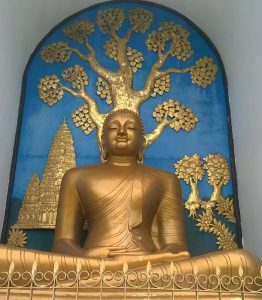
The older I get, the more I understand the teachings of Ramana Maharshi with regard to “The Guru.” The great sage would always meet a devotee exactly where they were on their journey. For those who didn’t understand, he would advocate the guru in the form of a physical being; a teacher. For those who did understand, he would deny that he was anybody’s guru and point them to the one, true guru within; “The Self.”

In simple terms, and in context, a guru can be anyone we cross paths with that we learn from. The obvious examples are parents and teachers at school. But it could also mean people we have difficulties with; even enemies (for want of a better word). As we evolve, those who choose the spiritual pathway may seek out a specific guru. There is also the guru that finds the individual in accordance with the old saying, “when the pupil is ready, the master will come.”

A true guru will reel the pupil in, in order to let them go. A true guru does not require worship. A true guru points the pupil in the direction of themselves in order to seek out the guru within.

When The Guru is realised, the guru disappears.

The Cycle Of Changing Perceptions


This post is the result of some musings of mine that relate to my own journey, but I’m sharing them because I feel that other people will have had a similar experience and may have drawn the same conclusion. Looking back, I would describe my evolution in this life as follows: It seems as though I have gone through two stages and am now going through a third. The first stage is that I’m born into this world and immediately start to be conditioned by my surroundings. My conditioning ensures that as I grow, I lose sight of my true nature and become fully entrenched in “life” and remain completely oblivious to the bigger picture. I’m completely unaware of the grip that the ego has on me and my only understanding of reality is what I see around me and what I’m told by my parents, teachers, peers and the media.

I think that is fairly general and probably applies to pretty much all souls taking human birth. Although, I’m sure there are exceptions to the rule. The conclusion from the first stage is that “I am this body and my reality is the world around me and its inhabitants.”

The second stage starts thus: I feel uncomfortable; there is something missing but I don’t know what it is. I start to seek, but I don’t really know what I’m seeking or how to seek it. Personally, I never felt that I belonged anywhere and this period, which started during my teenage years and carried on until I reached my 50s, was a very difficult time for me. The first place I looked was towards religion. However, the Christian church didn’t do it for me and I just drifted aimlessly for many years, getting more and more confused and feeling more and more isolated. Eventually, I realised that spirituality was far more expansive than my conditioning had led me to believe. I became aware of other forms of spirituality that were more appealing. By the time the 1980s came along my experiences and contacts at that time led me towards Spiritualism. It was also a religion that didn’t do it for me and I walked away for several years.

For various reasons, I ventured back and remained involved for many years. During this time I never considered myself to be a Spiritualist, but through other contacts that I made became drawn towards Eastern religions; particularly Buddhism and Hinduism. In the early 2000s I also acquired a guru in the form of Sri Sathya Sai Baba. What I conclude from this stage is that although Spiritualism pointed out the truth of eternal life to me, it seemed firmly entrenched in the past. In addition and in hindsight, I realised that it encouraged me to become attached to “objects” such as spirit guides, wolves, angels and crystals etc. These things have their place along the way, but ultimately, all objectivity, being dualistic in nature, is an illusion. It was Buddhist principles in particular that brought me to the awareness of “Oneness.”

Other milestones from stage two are that I became aware also of my greatest influences, namely – Paramahansa Yogananda, Neil Donald Walsch, Ramana Maharshi and of course Sai Baba. I read quite a lot of their writings without properly understanding what I was reading.

As I embarked on stage three I was dealing with the realisation that Buddhism and Hinduism, although still very appealing, also did not complete the picture for me. It made me further realise that all religions have their limitations and are mere stepping stones along the way.

I had the knowledge of Oneness but not the knowing. There is a huge difference. We have a habit of gathering lots of knowledge, which generally speaking is the experience of others and not ourselves. Knowing is to know something through the experience of it. An example that is used very often is the fragrance of a rose. How can you know what the fragrance of a rose is like through someone else telling you? You can only truly know by smelling the beauty of its fragrance yourself. A huge help to me has been the “discovery” of Rupert Spira. His videos and writings have helped me greatly to understand in greater depth the works of Neil Donald Walsch and Ramana Maharshi. Also, it’s worth mentioning that the greatest thing that Sai Baba taught me was that at no time would I have a need to worship, or become attached to, his physical form; the physical form being akin to the objectivity mentioned above in stage two.

I can conclude this post by describing my soul’s journey as follows: From the complete knowing of Infinite Consciousness to complete ignorance on embarking on a physical experience. Then awakening to the understanding that I am not a body/mind but making the mistake of thinking that all the answers are in the esoteric and pretty much at one point believing that the world had no significance whatsoever. To the further understanding that the only reality is Consciousness, therefore the world and the esoteric are in fact One, both being projections of Consciousness, by Consciousness within Consciousness.

Will there be a stage four? I don’t know, but what I do know is that one day I will complete the cycle of changing perceptions by returning to the complete knowing of Infinite Consciousness.
Do Not Chase The Tail


I saw what I thought was an incredibly funny cartoon on social media recently, although I believe they are called memes these days. It was a take on the classic old spiritual thing of a seeker going up a mountain looking for a guru and/or enlightenment. The only thing was that this cartoon features dogs and not humans. I wish that I’d kept a copy because I cannot remember the caption word for word, but I think you will still get the gist of what I’m trying to say. Our intrepid canine friend reaches the mountain peak and there finds the wise guru dog sitting on a throne. The caption went something like this:

“Chase not the tail, for the tail is already yours”

Apart from finding it rather amusing I also found it very profound and it reminded me of something I’ve written about several times in the past. However, I’m not going to repeat myself here, I’m going to leave that to the masters:

“You are already that which you seek” – Ramana Maharsh

“Before enlightenment chopping wood, carrying water

After enlightenment chopping wood, carrying water” – Old Chinese proverb

“When the road ends and the Goal is gained the pilgrim finds that he has travelled only from himself to himself, that the way was long and lonesome, but, that the God whom he reached was all the while in him, around him, with him, and beside him! He himself was always Divine. His yearning to merge in God was but the sea calling out to the ocean.” – Sri Sathya Sai Baba


If You See The Buddha Kill Him


If You See The Buddha Kill Him is probably the most famous quote from the great Zen master and man of myth and legend, Bodhidharma. Taken literally, one would expect that it would be a very tongue-in-cheek thing to say. especially as the great Siddhartha Gautama (better known as The Buddha) had already long since left this life by the time these words were said to have been uttered. However, when we look deeper into this statement from the perspective of what Bodhidharma actually meant, we find something very profound indeed. For me, in my very  humble opinion, the meaning is twofold, and I shall share both views in this post.

Firstly, if you see someone coming towards you and he/she looks and acts like a Buddha (an enlightened one), then you can bet your life that it is not a Buddha. Buddhas walk among us unnoticed because awakened souls tend to be very unassuming and do not stand out from the crowd, not in the sense that the phrase “standing out from the crowd” is usually meant. Buddhas don’t need to stand out from the crowd from a “display” point of view because they reflect the light of consciousness wherever they go and mostly, only those who are spiritual seekers would recognise a Buddha-like act or gesture. A good example of this is the sage Ramana Maharshi. When the Maharshi first awakened, after a short space of time he made his way to the village of Tiruvannamalai, which sits at the foot of the holy mountain of Arunachala. He never left the area again until he gave up his body on the 14th of April 1950. He pretty much owned only the loin cloth on his back, nothing else, yet people from all over the world were attracted to his ashram, including the likes of Carl Jung and Somerset Maughan, simply because he reflected the light of consciousness.

So, the meaning of “If You See The Buddha Kill Him” from the above perspective, is don’t follow people who claim to be spiritual teachers, gurus and sages because if they were teachers, gurus and sages they wouldn’t have to make the claim.

Secondly, the meaning has to do with how people who are spiritual seekers quite often get attached to seeing clairvoyant visions, not realising that developing these types of attachments to psychic powers etc. will only hinder the quest for enlightenment. Clairvoyant visions (such as a vision of The Buddha during meditation) are not unlike our view of the world in day-to-day life. They are temporal forms that appear and disappear. That which appears and disappears is an illusion. The forms themselves are only real in that they are made, or comprised if you like, of consciousness. Consciousness is the eternally flowing river that never stays the same, hence form appears and disappears There is also the subject/object thing (the seer and that which is seen) going on here, which is duality and therefore also an illusion.

So, this is the meaning of “If You See The Buddha Kill Him”  from the above perspective. Do not get attached to or desire to develop psychic powers because this practice will only hinder your spiritual journey. Those who attain Buddhahood automatically develop such powers, but they see them for what they are and don’t worry about them. The attainment of Buddhahood or enlightenment is simply the realisation that you always were, are now, and always will be A Buddha, that once you attain Buddhahood the Buddha disappears.

Who Is It That Suffers?


I have mentioned in previous posts that I have chosen not to comment on the current situation regarding the pandemic, which has affected so many people around the world. I’ve always felt that there are enough armchair experts out there, without me chipping in as well.

But, with the amount of suffering that is going on, I feel inspired to write this post, not necessarily just about the current world-wide situation, but about suffering in general.

Like many, I have learned that going through difficult experiences has a habit of forcing us to look within ourselves for strength and inspiration, as opposed to looking to the external world; which quite often is the source of our troubles. It is also true to say that as a species, we evolve via our experiences, and being as our true nature is consciousness, this is only natural as consciousness is in a constant state of flux and evolution. I personally, feel very positive about what is happening in the world; I feel that the end product will be something quite amazing. Let us not forget that we have this wonderful thing called relativity and that the world moves in cycles. After every fall there is a rise and every painful experience ultimately leads to a pleasurable one, and vice versa.

Once again, I’m going to refer to the teachings of Ramana Maharshi to demonstrate the whole point of this article, as I feel his simple philosophy holds the key to whether we as humans live a life of peace or pain. The Maharshi would always address questions from devotees and visitors to his ashram in accordance with their ability to understand, so from this respect, it would be impossible to say that the following is the exact answer that would have been given to everyone who asked the question. But quite often, if anyone asked him why they suffer so much or why there is so much suffering in the world, he would say, “who is it that suffers?”

He would tell them to ask the question, “who am I?” The only answer being, “the One eternal Self.” He would remind them of this; their true nature, and say something like, “if you are and always have been the Self, which exists as it is with no knowledge of suffering, who then is it that suffers?” The answer to that question is that it is only the ego that suffers because of our habit of falsely identifying with the body as the reality.

No one is saying that it’s an easy ride; far from it. But having the understanding that we are ultimately just “the witness” to what is happening and not a participant helps a great deal. Finally, I refer you to my previous blog post “Be Still.” I find that simply being still is a very effective way of getting through each day. There is most definitely something happening, but we need to look within ourselves to find out what that is. I find that it is only during moments of stillness that the Self reveals its secrets.

Be Still


One thing that has become apparent to me in this crazy life, is that when it comes to the “realisation of the Self”, time and space are irrelevant. What I mean is, that it matters not where you are in the world or what time of day it is, the Self is always just as it is. You can only awaken exactly where you are and nowhere else. Of course, it is always nice to go on pilgrimages and to visit holy sites or places of beauty in order to induce feelings of peace and oneness with the “all that is.” But ultimately, it makes no difference whatsoever.

I remember my own personal experience when I received the inner call to visit the ashram of Sri Sathya Sai Baba back in 2009. There I was, at “The Abode of the Highest Peace”, yet at every opportunity I would go to the internet cafe to check emails or see how my football team was doing. Ramana Maharshi used to say, that there is no point in going to the Himalayas to sit in a cave, when all you do when you are there is think of home. He would also say, that we sit at home thinking that it will induce realisation of the Self if we go to the Himalayas, but once we get there we spend all our time wondering what’s going on back home. It doesn’t matter where we are in the world, if we are not ready and the mind is over-active then it will prevent us from from experiencing our true self, which is pure Being.

My own personal environment is a constant reminder to me that I have some way to go before realising that I am already realised (by that, I mean having the constant direct experience that I am already that which I am seeking). The little town where I live gives me constant reminders of my own petty judgements and prejudices, which will have to be dealt with before I get any lofty spiritual ambitions.

I have come to the conclusion that the only really effective form of spiritual practise, is to “be still.” Even recognised and traditional spiritual practises, such as yoga and meditation, only induce a temporary awakened state. The practitioner must at some stage return to the world. Simply being still, seems to be the best way to connect with the inner silence; the infinite cave of wisdom, which is effectively “the Self.” Giving up all ideas of doing and achieving also allows the higher power to work through us.

The root of all our pain and suffering is that most of us are not human beings (or humans being), we are humans doing!

Peace Descending


I was not even born when Ramana Maharshi left this earthly life and I didn’t even hear of him until roughly the last 10-12 years ago, but the impact he has had on my life has been amazing.  Of course, he was no mere mortal, but even so, his influence on me defies all logic.  Today, for example, I finished reading The Mind of Ramana Maharshi by Arthur Osbourne, for the fourth time.  The penultimate chapter covers the great sage’s mahasamadhi.  As I was reading it I felt very tearful; not out of grief, but because I was so touched by the graciousness shown to his devotees throughout his time in Tiruvannamalai.  The book managed to convey this to the reader very admirably.  Even in the last hours of his earthly life he was still giving darshan.

I have found that whenever I feel that the world is getting to me, and I feel myself getting sucked in by the tricks of the ego, a bit of Ramana Maharshi always brings me back.  I always get such a feeling of peace descend upon me when I read about his teachings and life.  For me, the main message that flows from the pages is that The Maharshi radiated such peace, and it is as though I am touched by that very same peace as I read; everything about him was just pure love.

There aren’t really any words to explain this kind of thing properly, and I’m sure some people reading this will have had the same experience with their own particular life influences and will understand what I mean; words.being completely unnecessary.

The Servant


Word spread across the countryside about the wise Holy Man who lived in a small house atop the mountain.  A man from one of the villages nearby decided to make the arduous journey up the mountain to consult with him.  When he arrived at the house he was met by an old servant who greeted him, “I’ve come to see the wise Holy Man”, said the villager, “I wish to have his counsel”.  The old servant smiled and nodded, and gestured for the man to step inside.  As the servant led him into the house, the man looked around in great excitement and anticipation, awaiting his first glimpse of the Holy Man.   Before he knew it he had been led right through the house and out the back door.  “But I want to see the Holy Man”, he exclaimed.  “You already have”, said the old servant, and he promptly shut the door…

Everyone we meet is a “Holy Man”, and there are a few ways of looking at this one.  From the perspective that the world is a mirror, there is always something to observe and glean from everyone who crosses our path.  The totality is present in all, not just a chosen few, and the recognition of this is always handy, especially when we encounter people that we may have difficulties with.  It is far easier to judge than to look beyond the surface, which is what the villager did when he was greeted by the old man.  But all is the Self, as Ramana Maharshi would say, and in truth nothing else exists; all is the “whole”, all is the “Holy”; therefore we are all the “Holy Man”.


He Who Knows


The title of my forthcoming book has changed already!  It is now called “The Road to Nowhere – embracing the totality”, and here for your pleasure (I hope) is another extract to be…

A group of disciples were in the temple one morning awaiting the arrival of their master, Lao Tzu.  As they waited, they pondered the meaning of one of the great master’s teachings:

He who knows

Does not speak

He who speaks

Does not know


When their master appeared, they asked him to elaborate on the meaning. Lao Tzu responded by asking them if they had ever experienced the fragrance of a rose.  Every single hand went up.  He then asked the question, “who among you is able to explain it to us?”  No hands went up.

And this lovely little parable aptly demonstrates, that for some things, there is simply no explanation.  Just how would anybody describe the fragrance of a rose to any degree of accuracy?  There are simply no words in the dictionary to describe such beauty.  The same can be said of enlightenment, which for me is the meaning contained within this teaching.  I do not for one minute claim to be a fully realised soul.  However, I am going through a tangible awakening process that has been happening to me in stages for some years now.  There are many words that I could use to describe my experience; emergence, awakening, eureka moments to name but a few, but none of them would come anywhere near an apt description.

I have heard people use the expression, “I am awake”.  But ultimately, this is only the ego speaking.  To make the statement “I am awake”, or “I am enlightened”, implies the existence of opposite states of being asleep or unenlightened.  This is duality.  In consciousness there is no duality; there is only One, therefore, a truly awakened individual would not offer any explanation of being awake or otherwise.  They would simply abide in the true nature of their Being; infinite consciousness.

Ramana Maharshi also has a take on this, which I find quite beautiful.  He said that “truth has no words” and that “silence is the eternal flow of language, obstructed by words”.

A Truely Delightful Soul


The plot continues to thicken with regard to my astral adventures.  I have now had the pleasure of the company of a truly delightful female soul, not once, not twice… but three times!  As usual, I have no clue what it is all about or what purpose it serves, but I have had much worse experiences in my life, I can tell you!  Being an advocate of the teachings of Ramana Maharshi and Rupert Spira, I know that the development of attachments to relationships such as these will do my long-term spiritual growth no good whatsoever.  However, it is also true that Zen teaches the importance of embracing the totality.  So, if this experience has come my way in the last few months, I’m going to accept it.

At first, she seemed quite excitable and a bit too playful; to the extent that I was questioning it.  But the two subsequent times we have astral travelled together she has been much more disciplined.  I’m presuming that we know each other from way back, but I don’t honestly know.  What I do know is that she is a really lovely and very affectionate soul.  I’m looking forward to sharing more adventures with her, if that is how we are going to roll; in fact, I’m hoping that even as I type, she is perusing the astral travel brochures and planning our next trip!