As the lotus greets the first rays of the morning sun
So does the soul awaken to the sweet song of enlightenment
Like a temple bell calling a monk back to the present moment
The soul remembers its true nature, and
Immediately basks in its glory


As the lotus greets the first rays of the morning sun
So does the soul awaken to the sweet song of enlightenment
Like a temple bell calling a monk back to the present moment
The soul remembers its true nature, and
Immediately basks in its glory
I saw on social media recently that someone posted the following passage from the Bhagavad Gita. I wanted to share it before continuing because it kind of ties in with what I wanted to write about.
The soul is neither born nor does it ever die. Having never existed will it ever cease to be? The soul is birthless, eternal, changeless, immortal.
Bhagavad Gita 2:20
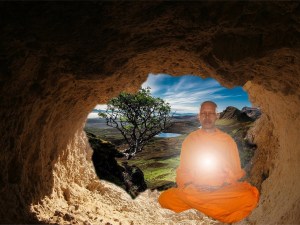 I’ve come to realise even more recently just how difficult the spiritual pathway really is. Before I continue, did you notice what happened there? I made a very contradictory statement; “the spiritual pathway.” There is no pathway or journey because ultimately, the only reality is Consciousness, which exists exactly as it is, as seamless eternal bliss, love, infinite awareness; the list of names we could call it is endless. I’ve written about this before, and you can see that we haven’t even gotten into the post properly yet, but things have become complicated. This is just one reason why the “spiritual pathway” can be such an arduous “journey.” As if life wasn’t challenging enough, we are hampered on our way by language; or to be more precise, the limitations of language. The main crux of this post cannot be aptly explained with any words from any dictionary in any language. What we have to do in these situations is use the words that fit best with what we want to say, even if it isn’t going to be 100% accurate.
I have come to the conclusion that pretty much all forms of spiritual practice are a bit of a red herring and ultimately can never be anything more than stepping stones as we blunder and stumble our way through life. I’ve realised lately that no matter how spiritually evolved we believe ourselves to have become, life doesn’t get any easier, in fact, there’s a good argument to suggest that it just gets harder. Now, I am about to get to the point; honest, but just one more thing before I do.
In order to negotiate life’s hurdles, I have found that it really does help to understand that everything along the spiritual pathway (there I go again, making contradictory statements) has context, and my truth may not be your truth and vice versa.
There are many examples of spiritual practice, but the one I want to focus on for the purpose of this article is the practice of “Surrender.” The reason being, that it’s a great example of what I’m trying to put over. For the uninitiated, I shall try to explain using my very limited understanding of the Hindu religion. In Hinduism, there are three recognised pathways to enlightenment; Bhakti (devotion), Karma Yoga (selfless service to humanity) and Surrender (complete surrender to God). I’m happy to stand corrected on this and I’m sure that in India these three pathways are not restricted to Hindus.
I’ve been struggling quite a lot recently with my mind causing absolute havoc, and it was during one such struggle that I came to the conclusion that no matter what we think we are doing with regard to spiritual practice, there is something underlying in the driving seat, going largely unnoticed and quietly going about its business, and that something is Consciousness simply being itself. It was during this moment of struggle that I had the epiphany regarding spiritual practice, and Surrender specifically came to mind. It seemed to me that to practice Surrender, the aspirant must delve into the world of illusion in order to ultimately gain something that he/she already has.
To clarify, we must first objectify a deity that exists as a separate entity from ourselves, in order to then surrender to it. The outcome of which, we hope, would be that we become enlightened. Considering that our true nature is that of the aforementioned Consciousness, which exists simply as itself, we would have to give credence to the illusion of subject/object (seer and that which is seen); also known as duality, we would also be affirming this illusion with our “spiritual” practice, and for what? To gain something we already have. This is where context comes in.
I’m currently experiencing a turbulent time with regard to my mind and the thoughts it’s throwing up. However, I am big enough and ugly enough to know that this turbulence is of my own making, and this gives me the power to be the captain of my own skateboard (I just made that saying up). When I cast my mind back 20 odd years, I was in an awful psychological state, and the “Me” that existed then would not have had a clue what all this Surrender malarky is about. Instead, I eventually started a journey of spiritual practice that got me out of that predicament and set me on the road to becoming who I am today. The practices I undertook back then would be considered very inferior to the practice of Surrender, but in the context of where I was and what was going on with me, those practices were valid and exactly what I needed.
To conclude, within the context of the illusion of duality, which we are all experiencing at this moment, all spiritual practices have some form of relevance in relation to where we are as individuals. I see them as a kind of penance, but not in the harsh, religious sense. They are simply a way to go about opening the doors of evolution for the soul who is floundering and lost. This now brings me back to the beginning and that quote from the Bhagavad Gita. Ultimately, there is no individual soul, there is only Consciousness having the adventure of experience, driven by itself, within itself and of itself.
Consciousness is unable to have this experience without veiling itself in ignorance. Paradoxically, the “gift” of duality is the way back from this ignorance to enlightenment. Enlightenment being the realisation that we are already enlightened, and ultimately, that there is no such thing as enlightenment.
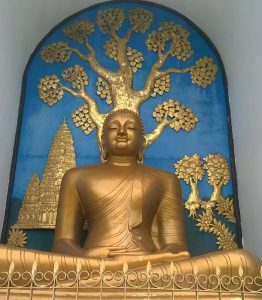 If You See The Buddha Kill Him is probably the most famous quote from the great Zen master and man of myth and legend, Bodhidharma. Taken literally, one would expect that it would be a very tongue-in-cheek thing to say. especially as the great Siddhartha Gautama (better known as The Buddha) had already long since left this life by the time these words were said to have been uttered. However, when we look deeper into this statement from the perspective of what Bodhidharma actually meant, we find something very profound indeed. For me, in my very humble opinion, the meaning is twofold, and I shall share both views in this post.
 Firstly, if you see someone coming towards you and he/she looks and acts like a Buddha (an enlightened one), then you can bet your life that it is not a Buddha. Buddhas walk among us unnoticed because awakened souls tend to be very unassuming and do not stand out from the crowd, not in the sense that the phrase “standing out from the crowd” is usually meant. Buddhas don’t need to stand out from the crowd from a “display” point of view because they reflect the light of consciousness wherever they go and mostly, only those who are spiritual seekers would recognise a Buddha-like act or gesture. A good example of this is the sage Ramana Maharshi. When the Maharshi first awakened, after a short space of time he made his way to the village of Tiruvannamalai, which sits at the foot of the holy mountain of Arunachala. He never left the area again until he gave up his body on the 14th of April 1950. He pretty much owned only the loin cloth on his back, nothing else, yet people from all over the world were attracted to his ashram, including the likes of Carl Jung and Somerset Maughan, simply because he reflected the light of consciousness.
So, the meaning of “If You See The Buddha Kill Him” from the above perspective, is don’t follow people who claim to be spiritual teachers, gurus and sages because if they were teachers, gurus and sages they wouldn’t have to make the claim.
Secondly, the meaning has to do with how people who are spiritual seekers quite often get attached to seeing clairvoyant visions, not realising that developing these types of attachments to psychic powers etc. will only hinder the quest for enlightenment. Clairvoyant visions (such as a vision of The Buddha during meditation) are not unlike our view of the world in day-to-day life. They are temporal forms that appear and disappear. That which appears and disappears is an illusion. The forms themselves are only real in that they are made, or comprised if you like, of consciousness. Consciousness is the eternally flowing river that never stays the same, hence form appears and disappears There is also the subject/object thing (the seer and that which is seen) going on here, which is duality and therefore also an illusion.
So, this is the meaning of “If You See The Buddha Kill Him” from the above perspective. Do not get attached to or desire to develop psychic powers because this practice will only hinder your spiritual journey. Those who attain Buddhahood automatically develop such powers, but they see them for what they are and don’t worry about them. The attainment of Buddhahood or enlightenment is simply the realisation that you always were, are now, and always will be A Buddha, that once you attain Buddhahood the Buddha disappears.
 Strictly speaking, there is no such thing as “enlightenment.” In our ignorance, we use the word when we are engaged in discussions around the subject, but it is only for the sake of using suitable vocabulary to fit the conversation. Enlightenment is nothing more than the realisation that we are already enlightened, we always were and we always will be. When we are slaves to the ego, we are either completely unconscious, or we have the knowledge that we are consciousness/spirit currently occupying a body, but at the same time we believe that we are on a “spiritual journey” in order to become what we call “enlightened.” You cannot become what you already are.
The genuinely enlightened souls who walk among us would never, ever make the statement, “I am enlightened” because to speak of enlightenment only affirms the existence of the state of being unenlightened, in other words it is an example of dualism expressed by one who is immersed in the illusion of duality (ego). In consciousness, there is only consciousness and nothing else; this is ultimate reality, there are no “states” and there is nothing to achieve. We can say that enlightenment is the knowing, experientially, of the nature of consciousness (which is our true nature).
A rather brash young man decided that he had attained enlightenment and no longer needed the guidance of his guru. He upped and left the temple and went around the region boasting of his spiritual achievements to anyone who would listen. He heard that there was a hermitage in a nearby town and decided he would make the journey and thrill the resident seekers and their master with his wisdom.

Photo by Raychan on Unsplash
En route, he took a pathway through a forest, and as he ambled on his way, he saw in the distance an old sanyassin leaning against a tree; there appeared to be clouds of smoke issuing up from around him. As the young man got closer he saw that the old man was smoking a long-stemmed pipe. He also decided that the old man would be an ideal candidate to hear the story of his spiritual greatness.
“Good day Sir”, said the young man, “I am an enlightened soul and it is your good fortune that I happened upon you. You may throw away your scriptures and spiritual texts, there is no pathway, no individual soul, no karma, no God, there is only the nothingness of consciousness; in fact, nothing exists.”
WHACK! As quick as a flash the old man rapped the young “master” around the head with his pipe. As the young man glared at him in anger, the old sanyassin said, “if nothing exists, where did that anger come from”, and he turned and went on his way..
The subject matter of this parable is something that I have written about before. But, I like this story so much that I wanted to share it here. Of course, technically what the young man said was correct, however, he fully deserved his rap on the head for his audacious display of ego. Truly enlightened souls never make the statement, “I am enlightened”, because in consciousness, “nothing” is indeed all that exists. But, to go around actually speaking of “nothing” in a dualistic world implies also the existence of “something.” Consciousness, in its limitless state of eternal bliss, has no idea that it is referred to as consciousness, because literally, “nothing” exists. So, in summary, to speak of being enlightened in a dualistic world only highlights that the ego is still present. An enlightened soul would never say, “I am enlightened” because the enlightened soul is only aware of the state of enlightenment, there is no duality to imply that there is also the state of “un” or “non” enlightenment.
 A long, long time ago in Japan, it was quite normal for marauding armies to ransack villages, with the villagers having to flee or be killed. In one such village an old Zen master sat peacefully in his very humble abode as chaos reigned outside. All of a sudden, a fearsome soldier kicked the master’s door open and stood menacingly in the doorway; the master was unmoved. The soldier sneered and said, “what are you still doing here, are you not afraid? All of the villagers are either dead or have fled, yet you remain here.” The master replied, “what have I to fear, and besides, where would I go?” The soldier became angry, and drawing his sword raged, “don’t you know that I am a man who can run you through without blinking an eye?” The old master looked at him and said, “don’t YOU know that I am a man who can be run through without blinking an eye?”
With a body or without a body; it is all the same to one who has realised. Live or die; the master knows there is no death and therefore remains unmoved. There is also the paradox here between the polar opposites of “doing” and “being”. The soldier wants to “do” (kill) the master, but that in itself is a fruitless task, as the most he can achieve is to be the cause of the master’s body evolving (effect) into a different form. You cannot kill anything in reality as all is consciousness and is in a constant state of flux. What would happen to the body? If buried it would eventually decompose and merge with the earth. If cremated, the cremation process would cause the flesh to evolve into heat energy and be absorbed back into the total energy mass.
The master remained in a state of pure knowing, enlightenment, awakening, bliss or whatever description you wish to use; all are just terms for “Being”. The master remains blissful regardless of which action the soldier chooses to take. He says, “besides, where would I go?” Indeed, where would the master go? There is only here and now; it is all we have.
 The title of my forthcoming book has changed already! It is now called “The Road to Nowhere – embracing the totality”, and here for your pleasure (I hope) is another extract to be…
A group of disciples were in the temple one morning awaiting the arrival of their master, Lao Tzu. As they waited, they pondered the meaning of one of the great master’s teachings:
He who knows
Does not speak
He who speaks
Does not know
When their master appeared, they asked him to elaborate on the meaning. Lao Tzu responded by asking them if they had ever experienced the fragrance of a rose. Every single hand went up. He then asked the question, “who among you is able to explain it to us?” No hands went up.
And this lovely little parable aptly demonstrates, that for some things, there is simply no explanation. Just how would anybody describe the fragrance of a rose to any degree of accuracy? There are simply no words in the dictionary to describe such beauty. The same can be said of enlightenment, which for me is the meaning contained within this teaching. I do not for one minute claim to be a fully realised soul. However, I am going through a tangible awakening process that has been happening to me in stages for some years now. There are many words that I could use to describe my experience; emergence, awakening, eureka moments to name but a few, but none of them would come anywhere near an apt description.
I have heard people use the expression, “I am awake”. But ultimately, this is only the ego speaking. To make the statement “I am awake”, or “I am enlightened”, implies the existence of opposite states of being asleep or unenlightened. This is duality. In consciousness there is no duality; there is only One, therefore, a truly awakened individual would not offer any explanation of being awake or otherwise. They would simply abide in the true nature of their Being; infinite consciousness.
Ramana Maharshi also has a take on this, which I find quite beautiful. He said that “truth has no words” and that “silence is the eternal flow of language, obstructed by words”.
 All talk of Heaven and Earth is only relevant when one falsely believes the unreal to be real. From the perspective of the ego there is a huge gap between Heaven and Earth; a gap that cannot be explained in words, such is its gulf. It is also a myth that there are stages to attaining the dizzy heights of Heaven (enlightenment). The truth is that when the ego is present we create our own Heaven here on Earth (or Hell). In the same way that comparing a low number, for example 2, with a high number, say 20 billion, pales into insignificance from the perspective of the Absolute, where all numbers are irrelevant, the same can be said for comparisons between Heaven and Earth. In Absolute Reality, there are no stages to work through, no places to go to or compare; there is only the truth of Being, no separateness, no subject/object relationships; only One. Nothing else exists.

Hello! My name is Richard!
Life is a magical mystery; we cannot know the unknowable; we cannot comprehend that which is beyond comprehension. Religion offers an imaginary God (as a separate being) and a list of do’s and don’ts (moral code) for the masses to follow blindly. However, practitioners of religions more often than not end up using their moral code as a yardstick for passing judgement on others. The Divine cannot be known, it can only be experienced and no amount of scriptures and commandments will ever change that. Enlightenment, is coming to the understanding that everything we are looking for is contained within us; that we ourselves are Divine; that we ourselves are contained within every leaf of nature…
My latest video blog “Death Is Mythical”. Hope you enjoy it…
 Author - Richard F Holmes